Forward Deployed Engineer: What the Job Is and How to Get Hired
AI companies are hiring engineers who sit with the customer and ship the deployment themselves. Here is what the work actually is, who it suits, and how to land one of these jobs.
What is a forward deployed engineer?
A forward deployed engineer (FDE) is a software engineer who works inside a customer's environment and writes the production code that makes the product do that customer's actual job. A product engineer builds one thing for many customers. An FDE takes that one thing and makes it work for a specific customer's data, systems and people, then carries what they learned back to the product team.
The role comes from Palantir, where Forward Deployed Software Engineers, known internally as “Deltas,” embed with customers to configure Palantir's platforms to their problems. They work alongside Deployment Strategists, the “Echoes,” who own the customer relationship and the problem definition. AI companies have since taken the title, and the idea, for their own deployments.
Why AI startups are hiring FDEs now
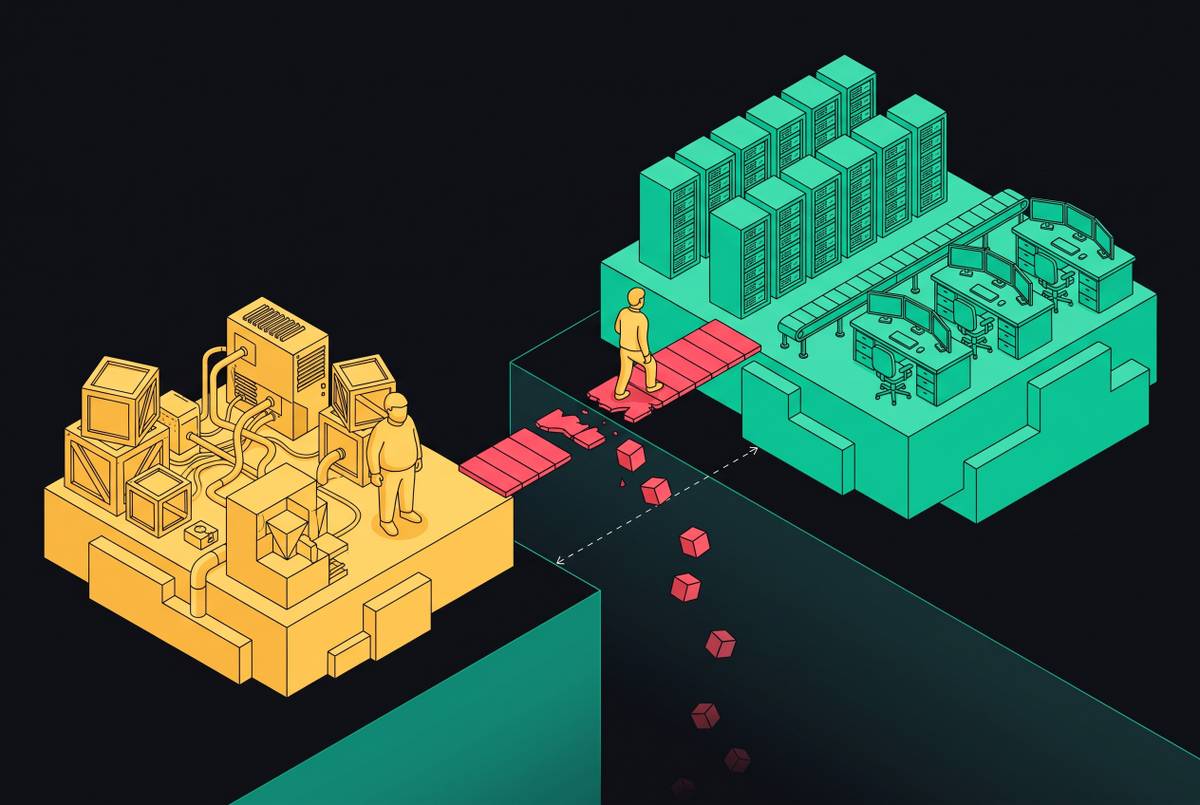
A frontier model is the same for every customer. What it is worth to one company depends on whether it can read that company's documents, call its systems, follow its rules and hold up when real users hit it. The gap between a convincing demo and a deployment people rely on is where the work is, and it is the work an FDE is hired to do.
The model labs say so in their job posts. OpenAI's Forward Deployed Engineering team describes FDEs as leading “complex end-to-end deployments of frontier models in production alongside our most strategic customers,” owning discovery, technical scoping, system design, build and rollout. Anthropic's FDEs sit in its Applied AI team and embed with its most strategic customers. Venture firm a16z has called the FDE “the hottest job in tech,” as The Pragmatic Engineer reported.
For a startup, FDEs also make up for a product that isn't finished yet. That is the same pressure we describe in the technical mandate gap between Series A and Series B AI startups: early on, engineers own the whole delivery loop because nothing about it is repeatable yet.
What the work looks like week to week
The details change with every customer, but the loop is consistent:
- Discovery. Sit with the people who will use the system, find the workflow that matters and agree what “working” means before anything is built.
- Scoping. Turn a broad ask (“use AI on our claims”) into something that can ship in weeks, and say no to the rest for now.
- Build. Connect to the customer's data and systems, write the prompts, retrieval, tools and glue code, and build evaluations that show whether output is good enough.
- Production. Get it through the customer's security review, deploy it where they run things, watch it under real load and fix what breaks.
- Feedback. Write up what had to be custom so the product team can make it standard for the next customer.
Expect to be on calls with people who are not engineers, to work inside systems you don't control, and, at many companies, to travel to customer sites. How much travel varies widely; the job post or recruiter should tell you.
FDE vs. software engineer vs. solutions engineer
The titles overlap, and companies use them loosely, so read the responsibilities, not the title. In general:
| Forward deployed engineer | Product software engineer | Solutions / sales engineer | |
|---|---|---|---|
| Works for | One customer (or a few) at a time | Every customer, through the product | Prospects and new customers |
| Writes production code | Yes, in the customer's environment | Yes, in the company's codebase | Mostly demos and proofs of concept |
| Work ends when | The deployment is live and used | The feature ships and holds up | The deal closes or the pilot is handed over |
| Judged on | Whether the customer gets the outcome | Product quality and velocity | Revenue won and technical wins |
Skills hiring managers look for
- Shipping end to end. You can take something from a blank repo to a running service, including the unglamorous parts: auth, data pipelines, deployment, logging.
- Building with models. Calling model APIs, retrieval over messy documents, tool use and agents, and above all evaluations: a way to show the output is right, not just impressive.
- Debugging in someone else's house. Unfamiliar stacks, locked-down networks, legacy systems and data that doesn't match its documentation.
- Scoping and saying no. Turning a vague request into a deliverable and protecting it from scope creep without losing the customer.
- Talking to non-engineers. Explaining trade-offs to an operations lead or an executive in their terms, in writing as well as in the room.
Deep ML research experience is usually not the requirement. Read each post: some FDE roles, such as OpenAI's AI-infrastructure FDE openings, lean far more technical than others.
How to get hired as a forward deployed engineer
- Ship one real deployment. Build an AI system for an actual user with an actual workflow, a team at your company, a nonprofit, a friend's business, and get it used. One deployment that people rely on says more than five demos.
- Show your evaluations. Keep the test set, the failure cases and what you changed because of them. That is the evidence an FDE interviewer is looking for.
- Write it up. A short case study, the problem in the user's words, what you scoped out, what broke in production, doubles as interview prep and proof you can communicate.
- Frame your resume in outcomes. Lead with what changed for the user or customer, then the stack. If you have done customer-facing, consulting, support-engineering or integration work, put it first; it is the rarest half of the profile.
- Search the variants. The same job is posted as Forward Deployed Engineer, Forward Deployed Software Engineer, Applied AI Engineer or Deployed Engineer. Go straight to company careers pages, where FDE openings are listed by team and city. Our guide to the applied AI engineer role explains where that title means something different.
Which companies to aim at matters as much as the application. Our guide to the best AI startups in NYC for engineers explains how to tell a company with real customers from one with pilots, and FDE work only exists where customers are deploying for real.
What the FDE interview tends to test
Interview loops differ by company, so ask your recruiter for the exact format. Most test some mix of the following:
- Practical coding, often closer to building a small working feature than to puzzle problems.
- A customer case: an ambiguous business problem you have to question, scope and design a first version for, out loud.
- System design for a deployment, including data access, security constraints and how you would evaluate quality.
- Behavioral questions about customers: a deadline you couldn't meet, a stakeholder who wanted something else, a time you pushed back.
What FDEs are paid, and where to check
We don't publish pay figures here, because they change by company, level and city faster than a guide can track. To check a specific offer:
- Read the range in the job post. US states with pay-transparency laws, including California, Colorado, New York and Washington, require one in postings.
- Compare reported offers on Levels.fyi for the company and level, and note whether they list the role as FDE or software engineer.
- Ask how variable pay and equity work for the role, and value startup equity by stage, not by the headline number.
Questions to ask before you accept
- How many customers will I work with at once, and for how long each?
- How much travel is expected, and is it on-site with customers or remote?
- Does my code go back into the core product, or does it stay with one customer?
- Who owns a deployment after it goes live, and am I on call for it?
- Where have past FDEs moved next: product engineering, management, product?
If you want to work remotely, ask how the FDE team handles on-site work in the first months. Our look at remote-first AI startups that actually hire well covers the signals that separate real remote teams from remote-tolerant ones.
Who the role suits, and who it doesn't
It suits engineers who like seeing their work used the week it ships, who are comfortable being the most technical person in a room of non-engineers, and who would rather solve ten different problems than polish one. It is a hard fit if you want long stretches of uninterrupted deep work on one codebase, dislike travel or context-switching, or want to specialise in model research.
It is also a role built around the tasks AI tools are not taking over. As we wrote in AI coding tools replacing junior engineers, the work that holds up is task decomposition, architecture and production hardening, which is most of what an FDE does.
Frequently asked questions
Is a forward deployed engineer a sales role?
No. FDEs often work with sales on large accounts, but they are engineers who write and own production code. Solutions and sales engineers are the pre-sale roles.
Do I need machine learning experience to become an FDE?
Usually not research-level ML. Most AI FDE roles want strong software engineering plus hands-on experience building with model APIs, retrieval and evaluations. Some infrastructure-focused FDE roles ask for more; the job post will say.
What does FDE stand for?
Forward deployed engineer. At Palantir, where the title started, the full name is Forward Deployed Software Engineer (FDSE).
Where can I find forward deployed engineer jobs?
On company careers pages first: OpenAI, Anthropic and Palantir all list FDE roles by city. Then search job boards for the title and its variants, such as Applied AI Engineer and Deployed Engineer.
Sources
- What are Forward Deployed Engineers, and why are they so in demand? (The Pragmatic Engineer)
- A Day in the Life of a Palantir Forward Deployed Software Engineer (Palantir)
- A Day in the Life of a Palantir Deployment Strategist (Palantir)
- Forward Deployed Engineer (FDE), San Francisco (OpenAI Careers)
- Forward Deployed Engineer (Anthropic, via Greenhouse)
- Forward Deployed Engineer: When This Role Makes Sense (CRV)